A single job post for a sales executive or a junior accountant can bring in several hundred applications. Recruiters spend days on phone screens that ask the same ten questions, and good candidates accept other offers while they wait. AI interviews promise to take on that first round. Used well, they make screening faster and more consistent; used carelessly, they can be unfair and opaque. Here is how recruitment teams can get the benefits while keeping people in charge of hiring decisions.
What an AI interview actually is
An AI interview is a structured first-round screening that a candidate completes online, in text, voice or video, at a time that suits them. The system asks a fixed set of role-relevant questions, may ask a short follow-up based on the answer, and produces a transcript and a summary against criteria the hiring team agreed in advance.
It does not replace the final interview or the hiring decision. Its job is to give recruiters a consistent, comparable view of every applicant so they can decide whom to invite next, faster than a round of phone calls allows.
Where AI interviews help most
- High-volume roles, such as sales, customer support, operations and teaching assistants, where the first screen is repetitive.
- Campus and fresher hiring, where many candidates have similar CVs and answers reveal more than résumés.
- Candidates in different cities or shifts, who can complete the interview any time within a window.
- Teams that want every applicant asked the same questions and scored on the same rubric.
Design the interview before you automate it
The quality of an AI interview depends on the questions and the rubric, not on the model. Start from the job description: list the four to six skills or behaviours that actually predict success in the role, write one or two questions for each, and describe what a strong, acceptable and weak answer looks like.
Avoid questions that invite information you should not use, such as age, religion, marital status or family plans. Keep the interview short; fifteen to twenty minutes is usually enough for a first round, and completion rates fall sharply after that.
Keeping AI screening fair
Recruitment is one of the areas where AI decisions affect people's livelihoods, and regulators treat it that way; the EU AI Act, for example, classifies AI used for recruitment as high-risk. Even where no such law applies, the same practices protect candidates and the employer's reputation.
- Tell candidates that AI is used, what it assesses and that a person makes the decision.
- Score answers on content against the rubric, not on accent, appearance or speaking speed.
- Have a recruiter review every rejection recommendation, at least until results are proven fair.
- Compare pass rates across groups, colleges and locations regularly and investigate gaps.
- Give candidates a way to ask questions or request an alternative format.
Candidate data and privacy in India
Interview recordings and transcripts are personal data. Under India's Digital Personal Data Protection Act, 2023 and its Rules, collect them for a stated purpose, keep them secure, limit who can access them and delete them on a defined schedule once hiring is complete. Ask for explicit consent before recording audio or video, and check your notice and retention policy with your legal adviser.
Fitting AI interviews into your hiring process
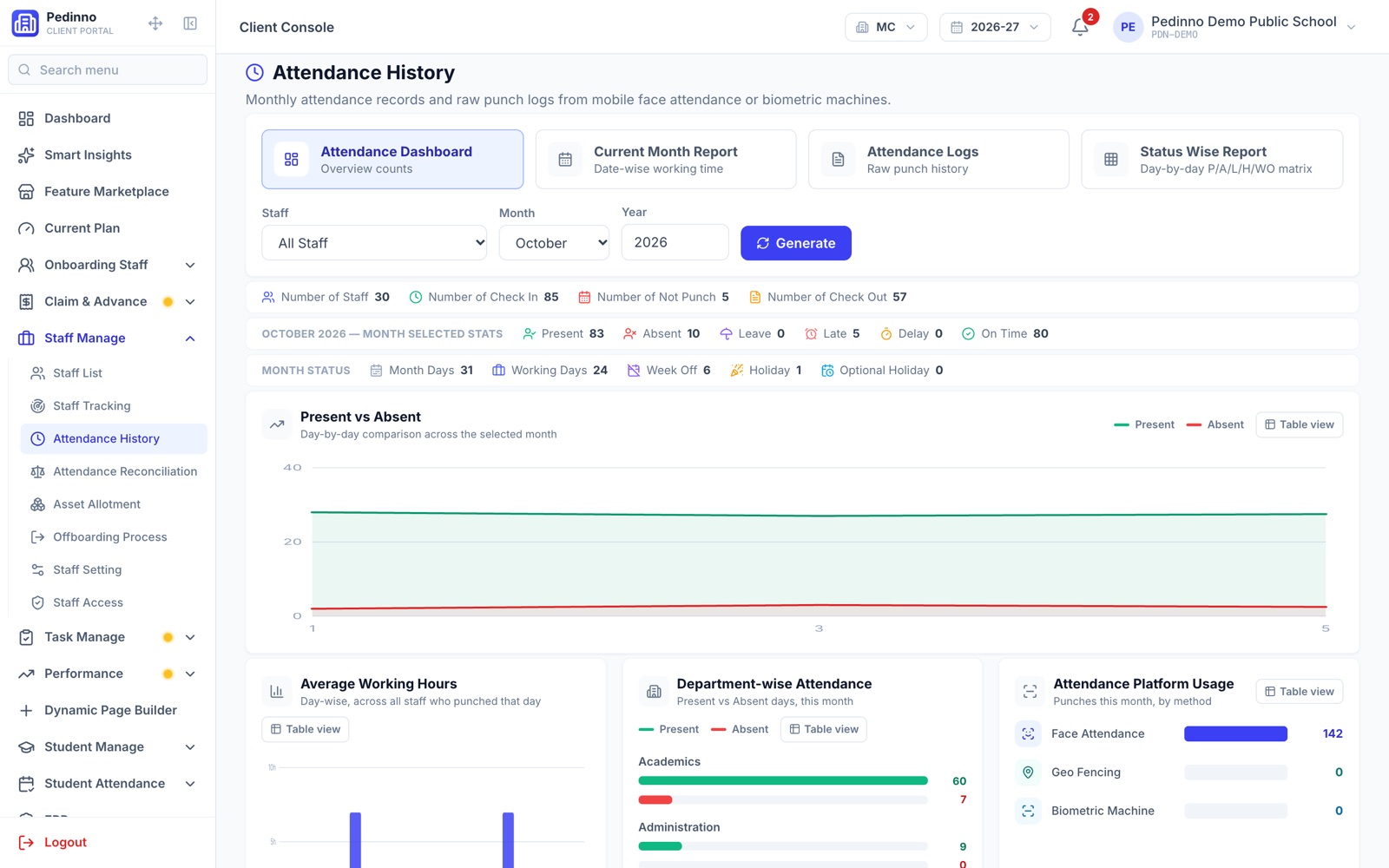
AI interviews work best as one stage in a connected pipeline: the job post, application, AI screen, recruiter review, panel interview, offer and onboarding all in one record. When the interview summary sits next to the CV and the recruiter's notes, nothing has to be copied between tools.
Pedinno AI HRMIS combines job posting, AI-assisted screening and interviews, onboarding and employee records, so a candidate who is hired moves into HR without re-entering their details.
Frequently asked questions
Do AI interviews replace recruiters?
No. They handle the repetitive first screen and give recruiters a consistent summary. Shortlisting, final interviews and hiring decisions should stay with people.
Are AI interviews fair to candidates?
They can be more consistent than ad-hoc phone screens because everyone gets the same questions and rubric, but fairness must be checked: score on content, review rejections and monitor pass rates across groups.
How long should an AI interview be?
For a first round, fifteen to twenty minutes covering four to six role-specific skills is usually enough. Longer interviews tend to lose good candidates.