A shortlisted candidate has cleared the interview, but the offer is waiting for approval. Another candidate has accepted and is still sending joining documents through email. HR has the information, yet nobody can see the next step without asking someone else. Hiring delays often come from handoffs between people and tools rather than a shortage of applicants.
Find the handoff that actually slows recruitment
Start by mapping an applicant's route from resume intake to the first working day. Record who owns screening, interview scheduling, feedback, approval, the offer and document collection. A pipeline marked only as open or closed hides these intermediate stages. It also makes it difficult to distinguish a candidate who is waiting for the employer from one who has not responded.
For each stage, define the information required to move forward and the person authorised to approve it. A shared candidate record is useful only when it reflects those responsibilities. Automating an unclear process can move incomplete information faster without making recruitment more reliable.
Make resume review consistent before introducing AI
Specify the role's essential skills and experience before reviewing applications. Use the same criteria across candidates and record reasons for progressing or rejecting them. AI-assisted resume parsing can organise candidate information and ranking can support screening, but neither establishes suitability on its own. A recruiter should check important details against the original resume and consider information that a scoring rule might miss.
Connect interview evidence to the hiring decision
An interview report is most useful when reviewers can connect it to the role's requirements. Agree on questions, scoring guidance and feedback ownership. In an illustrative hiring round, one manager assesses technical experience while another checks role expectations; both should see the same candidate profile. Review AI-generated analysis with the candidate's actual answers before using it to support a decision.
- Keep screening criteria attached to the vacancy.
- Record interviewer feedback before requesting approval.
- Assign one owner for candidate communication.
- Keep the final hiring decision with the HR team and hiring manager.
How Pedinno AI HRMS supports recruitment
Pedinno AI HRMS combines candidate management, resume parsing, candidate ranking, structured AI-assisted interviews and shareable interview reports. Staff approval and offer letter workflows connect the shortlist to the offer, with candidates responding online. Pre-boarding forms, document collection and appointment letters then support the transition into staff records. This gives the team a connected sequence to demonstrate rather than a collection of isolated HR tools.
Prepare for attendance, assets and the first day
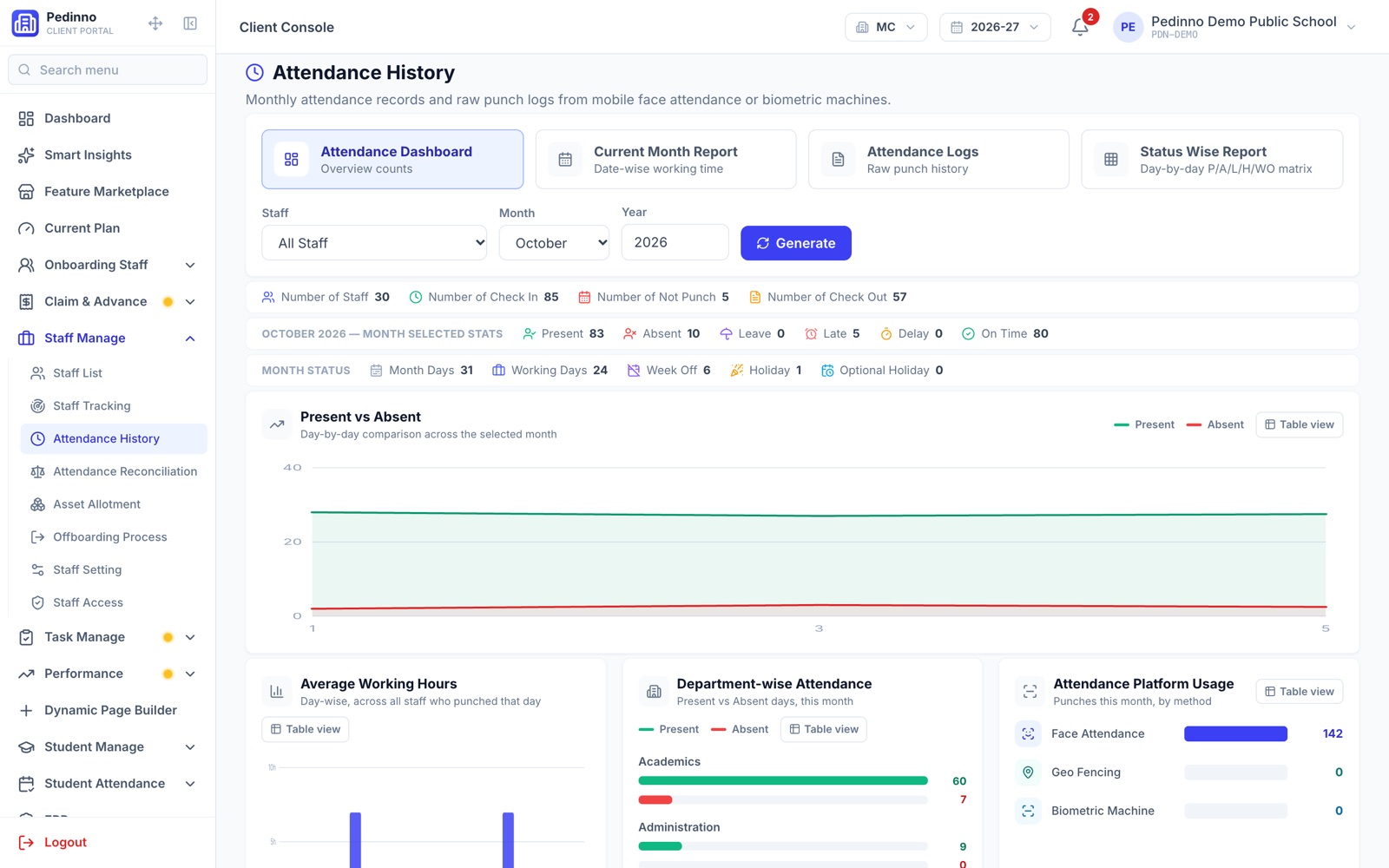
Onboarding continues after an offer is accepted. Confirm the employee's branch, manager, attendance method and required assets before the joining day. Pedinno HRMS includes staff records, attendance, leave, asset allotment and project workforce mapping. Explain the relevant app and attendance process to the employee. Payroll readiness also depends on verified salary and employee details, so agree on the handoff to accounts before the first pay cycle.
Pilot one vacancy and review the bottlenecks
Use one role to test the complete workflow, including a delayed approval, an offer response and a missing joining document. Measure time spent at each stage, the number of repeated information requests and the completeness of the joining record. Check the quality of AI summaries as well as their speed. A shorter pipeline is valuable when the team still makes considered decisions and candidates receive clear communication.
Frequently asked questions
Does Pedinno AI make the final hiring decision?
No. AI supports structured interviews and answer analysis. Hiring decisions remain with your HR team and hiring managers.
Can recruitment and attendance use the same HRMS?
Pedinno includes recruitment, staff records, attendance and leave workflows. Configure the transition from accepted candidate to staff record during implementation.
What should we bring to an HRMS demo?
Bring a sample vacancy, anonymised resumes, your approval stages and your joining-document checklist so the demo follows your actual hiring process.
See AI HRMS in action
AI-powered HRMS for hiring, onboarding, face and biometric attendance, leave, tasks, performance, assets, offboarding and project workforce management.
Ask the team to walk one anonymised candidate from resume intake through interview, offer approval and pre-boarding.
Explore AI HRMS & HRMIS