Most schools already collect the data they need to make better decisions: daily attendance, fee payments, test marks, transport routes and admission enquiries. The trouble is that it sits in registers, spreadsheets and separate software, and by the time someone compiles a report the term is half over. AI analytics changes when and how that information reaches principals, teachers and administrators. This guide covers practical uses, the data foundations you need and the care that student data demands.
From monthly reports to early signals
Traditional school reporting looks backwards: last month's attendance percentage, last term's results. AI analytics adds early signals, patterns that suggest a problem is forming while there is still time to act, such as a student whose attendance has dipped on Mondays for three weeks, or a class whose marks in one subject are falling after a teacher change.
The point is not to predict a student's future but to help staff notice sooner and start a conversation. Every flag should lead to a person who knows the student, not to an automatic decision.
Practical uses in schools and colleges
- Attendance: spotting irregular patterns by student, class or day, not only low averages.
- Academic support: combining marks, attendance and homework completion to suggest students who may need extra help.
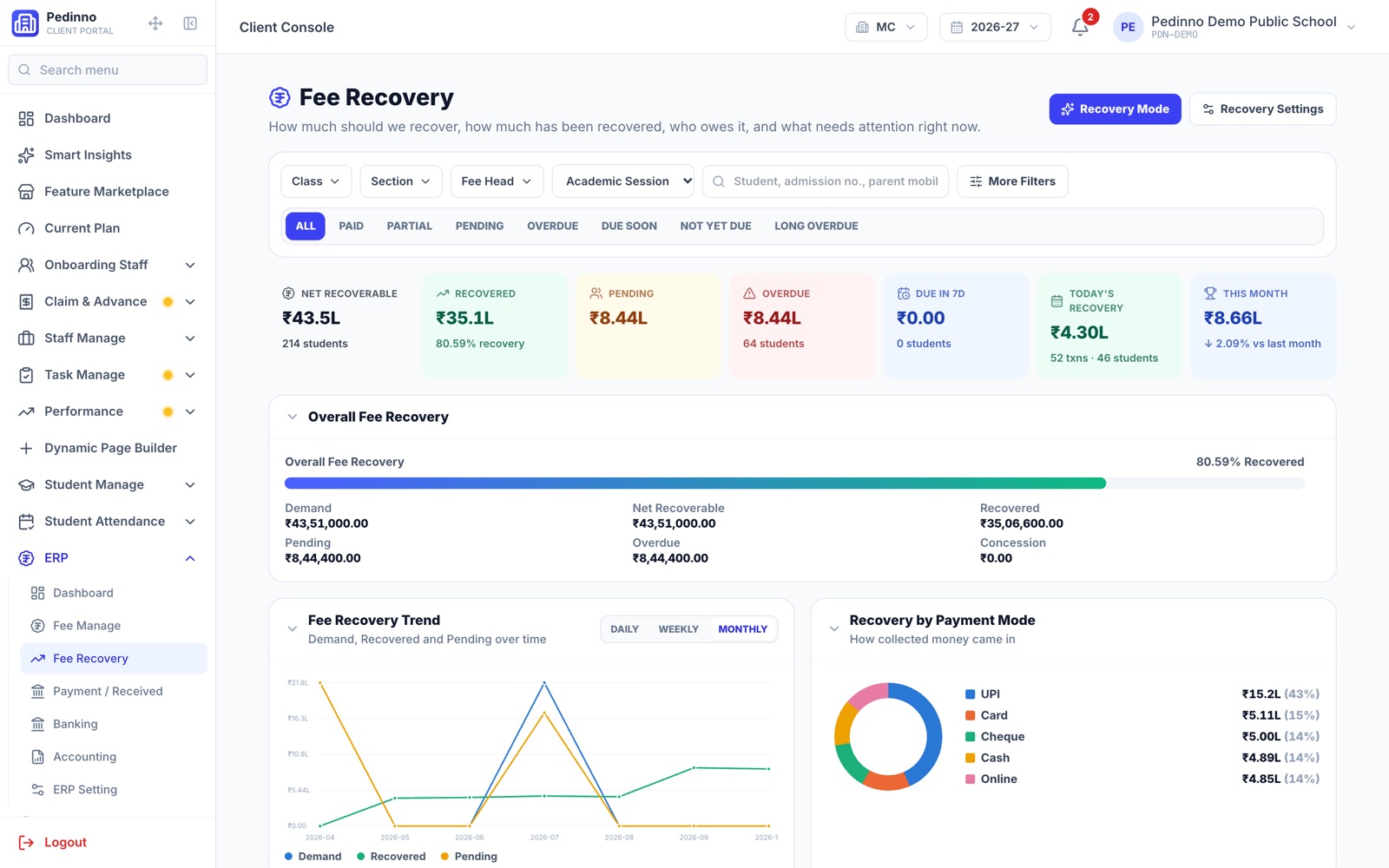
- Fee collection: forecasting dues by month and identifying families who may benefit from a reminder or instalment plan.
- Admissions: seeing which enquiry sources and follow-ups convert, so staff time goes where it works.
- Operations: planning transport, staffing and timetables from actual usage rather than estimates.
Ask questions in plain language
A newer change is conversational analytics. Instead of waiting for a custom report, a principal can ask, 'Which classes in Grade 8 had attendance below 85 percent last month?' or 'How much fee is outstanding for the second instalment, by section?' and get an answer drawn from the school's own records. This works only when the underlying data is clean and the definitions, such as what counts as present or overdue, are agreed in advance.
See how Pedinno AI Assistant answers questions from your own records
Get the data foundations right
Analytics is only as good as the records behind it. One student record shared by admissions, attendance, fees and exams avoids the mismatched names and IDs that break reports. Attendance marked on the day, fees recorded at the time of payment and marks entered by a fixed date make trends reliable.
An integrated education management system solves much of this by design, because every module writes to the same student record. Pedinno Education Management System brings admissions, attendance, fees, exams, transport and parent communication together, which gives AI analytics a single, consistent source.
Use student data responsibly
Student data is sensitive, and in India data about children carries additional obligations under the Digital Personal Data Protection Act, 2023, including verifiable parental consent and limits on tracking and targeted advertising. Collect only what the school needs, restrict access by role, explain to parents how data is used, and avoid labelling students in ways that follow them unfairly. UNESCO's guidance on generative AI in education also recommends a human-centred approach with clear oversight by educators.
Start small and measure
Pick one question that matters this term, such as reducing chronic absence in middle school or improving on-time fee collection. Build one dashboard or alert for it, agree who acts on each flag and how, and compare results with the previous term. Expand to other areas once staff trust the numbers and use them in their routine.
Frequently asked questions
Does AI analytics replace teachers' judgement?
No. It highlights patterns staff might miss in busy weeks. Teachers and counsellors decide what the pattern means and what support, if any, a student needs.
What data does a school need for AI analytics?
Reliable attendance, fee, exam and admission records linked to a single student ID are enough for most uses. Clean, consistent data matters more than large volumes.
Is it safe to use AI on student data?
It can be, with consent where required, role-based access, minimal data collection, secure hosting and human oversight of every decision that affects a student.